

冠泰佛 Champ Thai Fu Limited
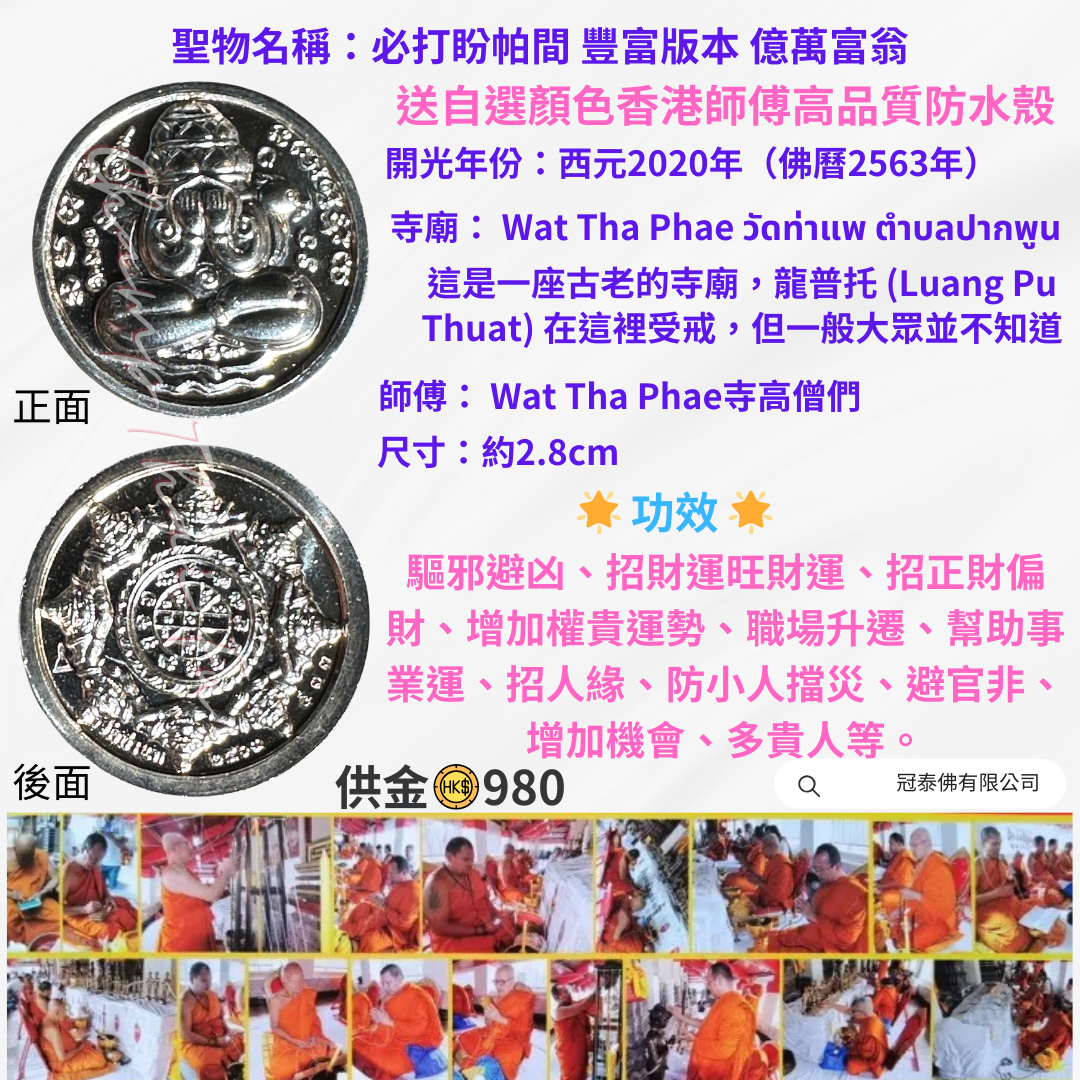
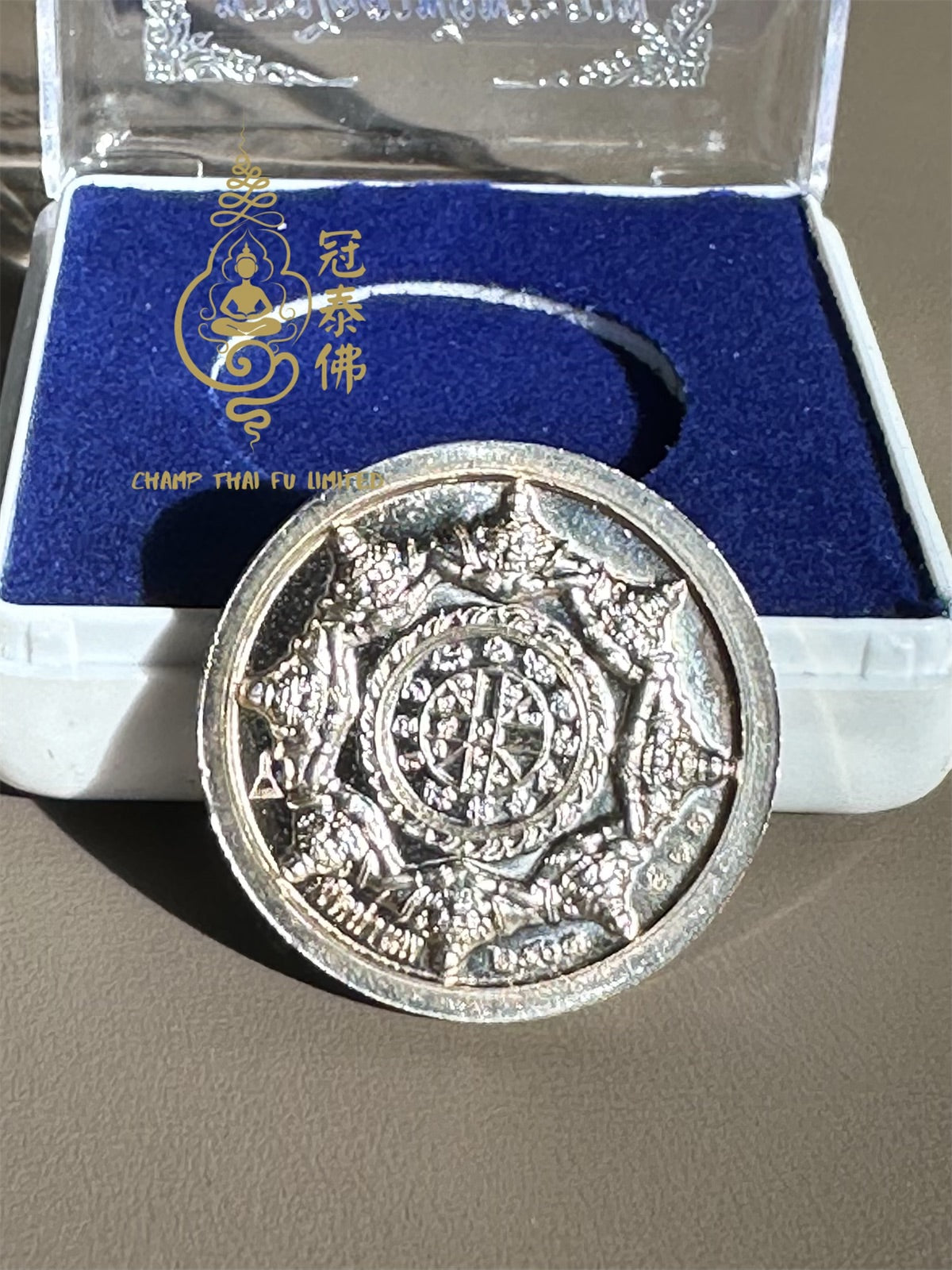
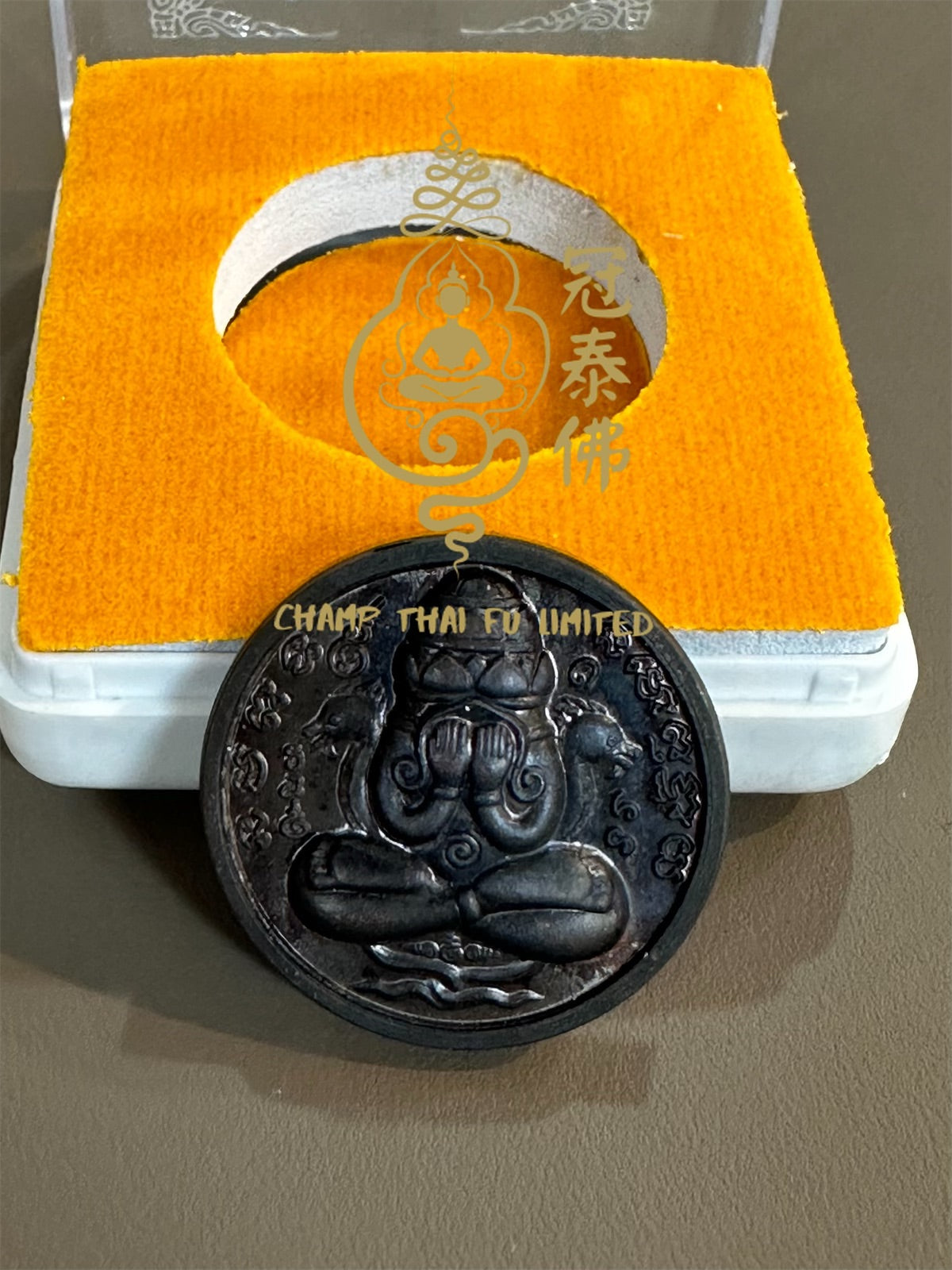
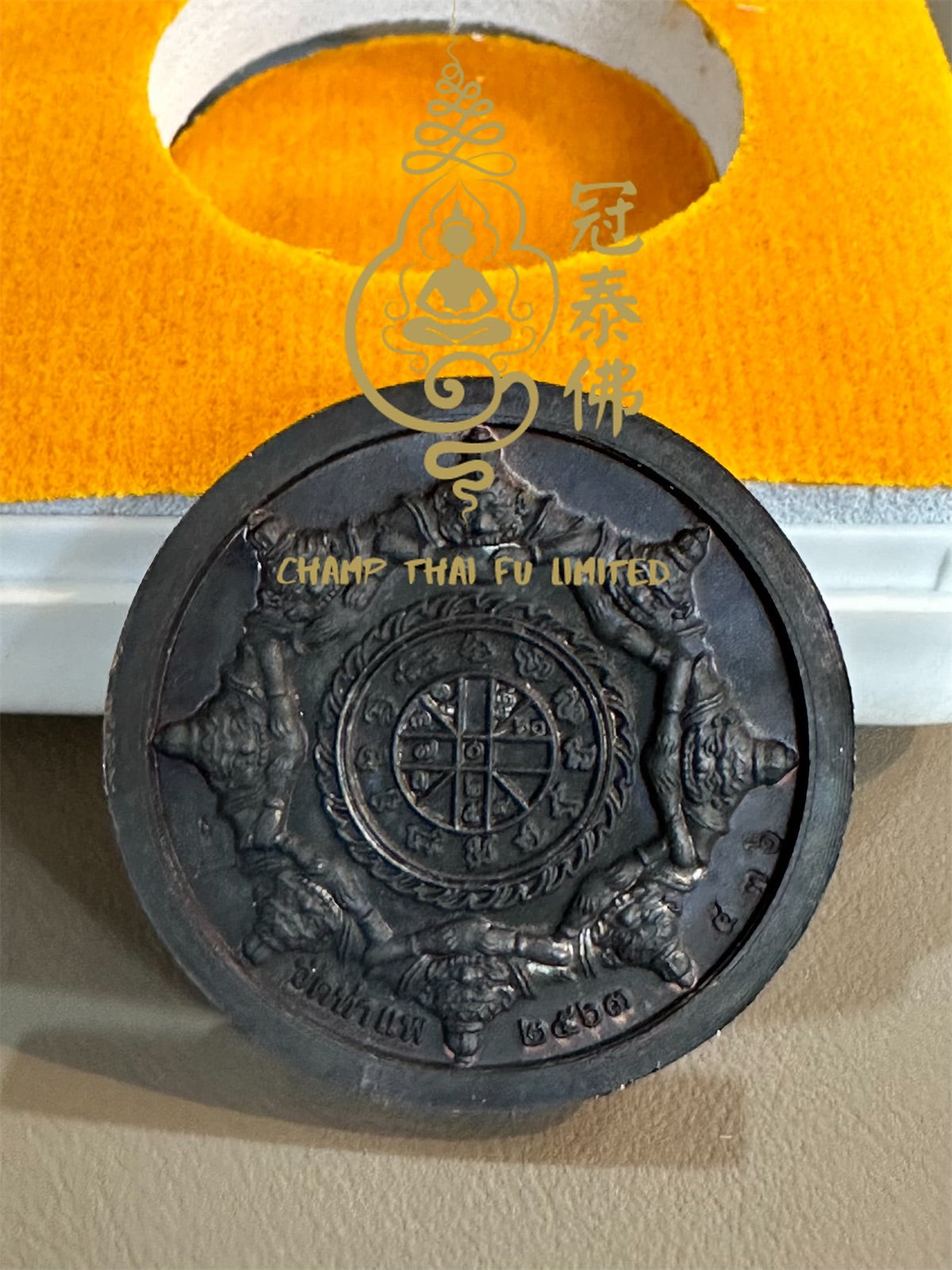
Phra Pidta Phra Phrom (a type of pajamas) - Rich Edition - Wat Tha Phae (Buddhist Era 2563) - Comes with a high-quality waterproof case of your choice of color, made by a Hong Kong master.
Phra Pidta Phra Phrom (a type of pajamas) - Rich Edition - Wat Tha Phae (Buddhist Era 2563) - Comes with a high-quality waterproof case of your choice of color, made by a Hong Kong master.
Couldn't load pickup availability
🌟Efficacy: Wards off evil spirits and misfortune, attracts wealth and prosperity, attracts both direct and indirect wealth, increases power and prestige, promotes career advancement, aids in business, improves interpersonal relationships, protects against backstabbers and disasters, avoids legal troubles, increases opportunities, and attracts benefactors, etc.
👄Introduction to Buddha Amulets👄
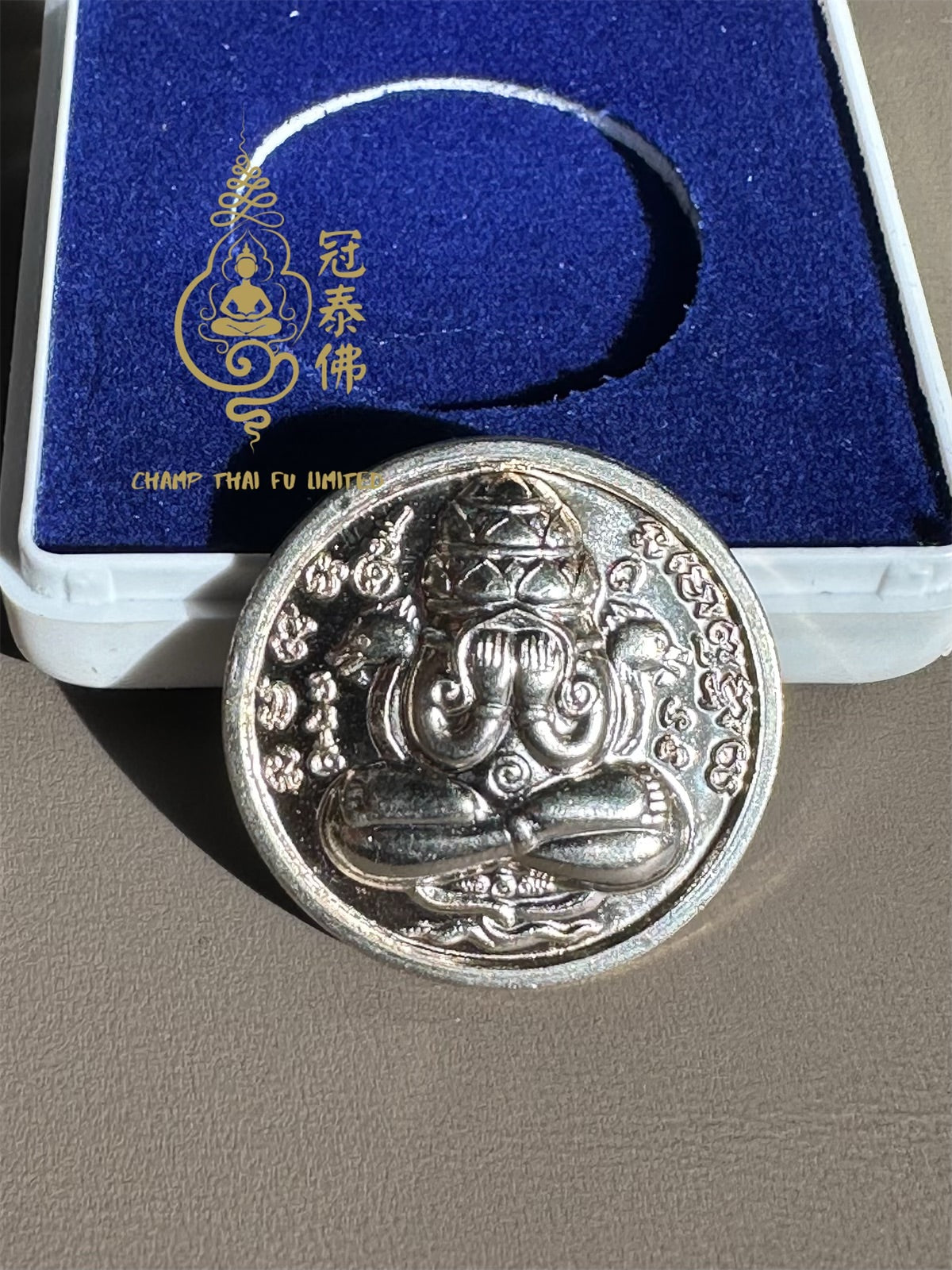
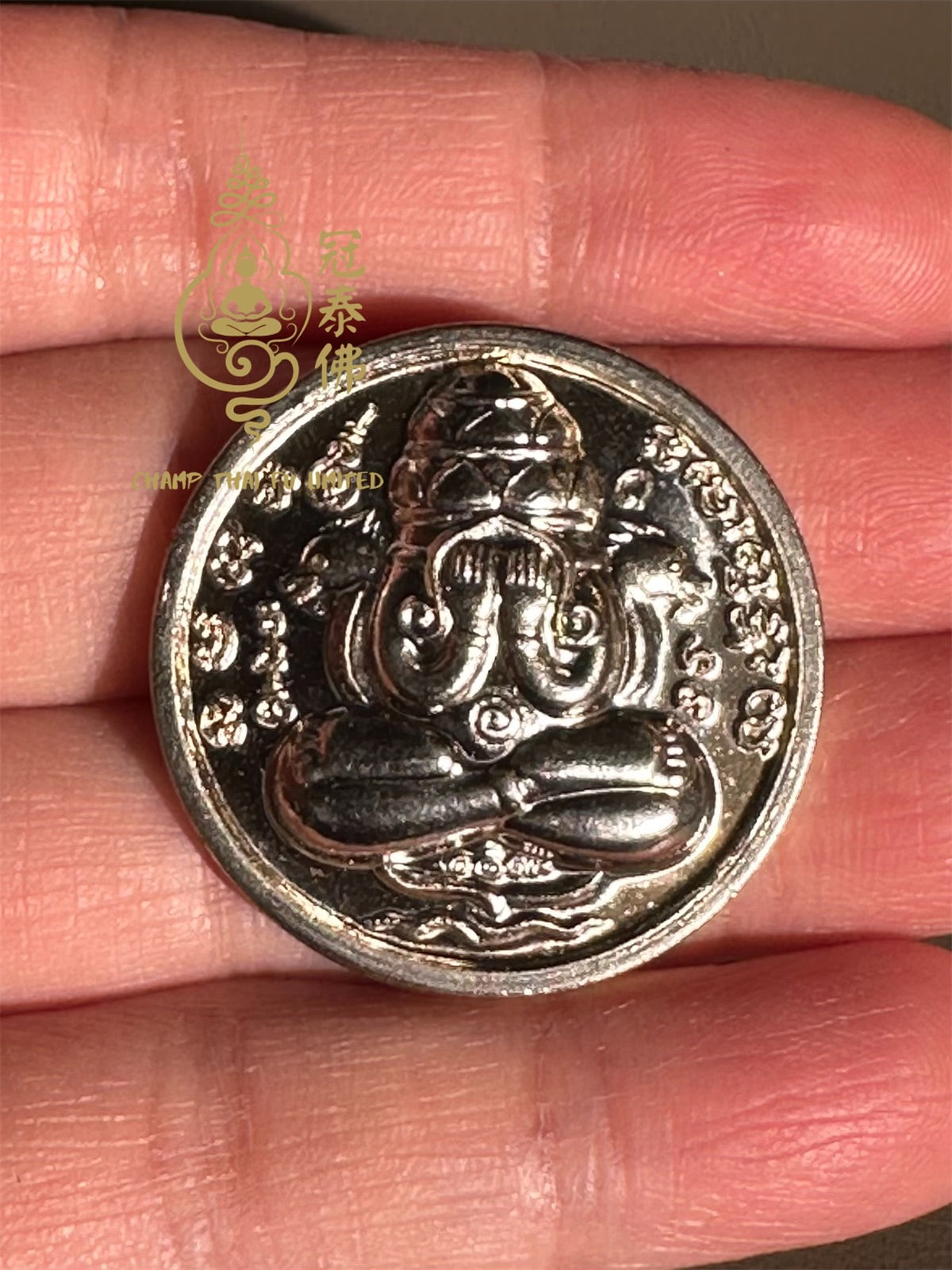
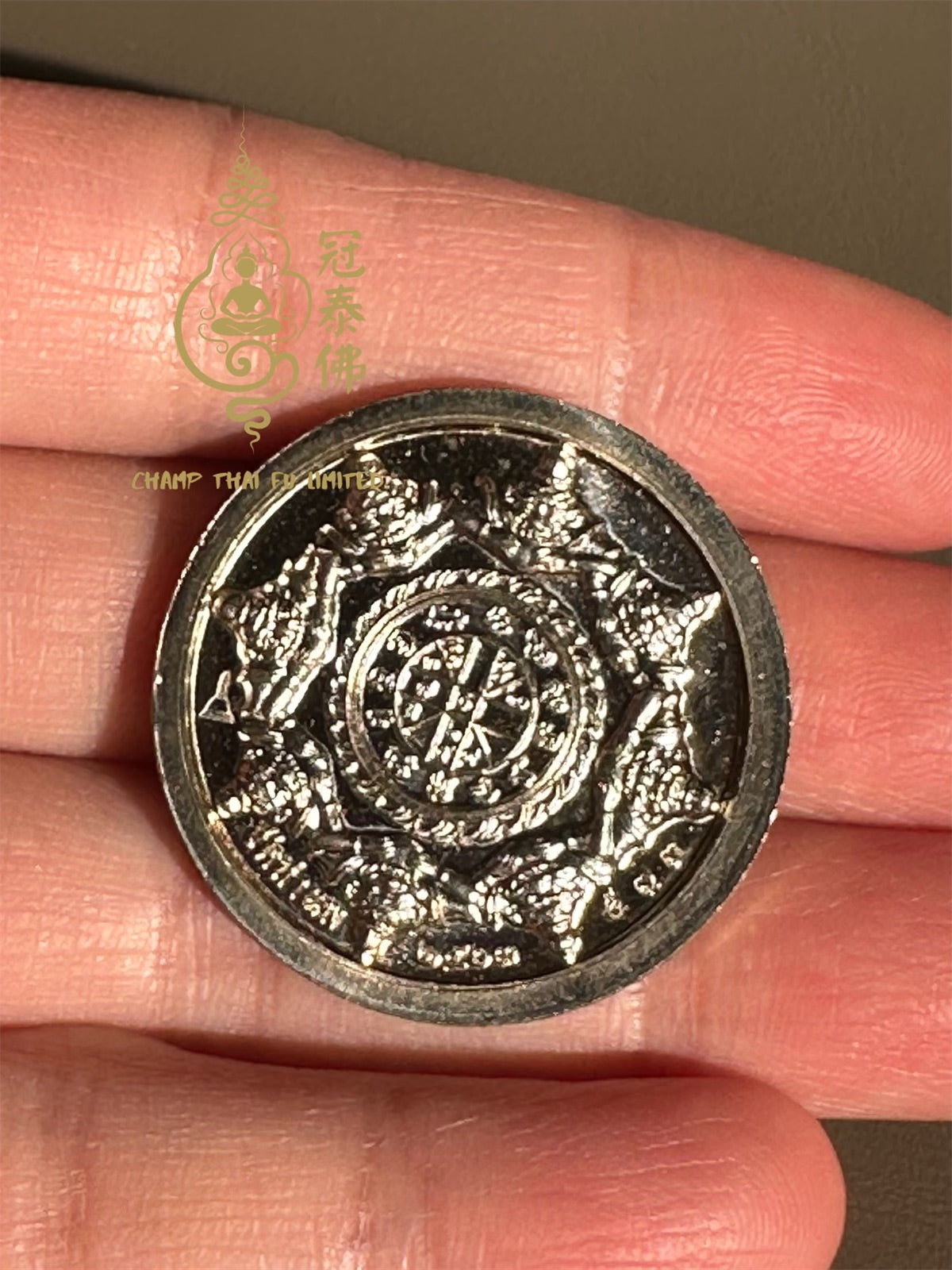
The front of the amulet features Phra Pidta Phan Phra Nam, while the back is surrounded by Rahu deities on all eight sides, symbolizing protection against misfortune and malicious people, and the ability to transform bad luck into good fortune .
Pita Phanpa is said to be the godson of Zedujin, or some say he is another incarnation of Zedujin.
Pham Phra Nam covering its face with its hands represents invisibility and has the function of protection, hence it is also called "Phra Nam Phra Nam". The snake coiled on its body or back represents the guardian deity always protecting its owner. Thais believe that Pham Phra Nam combines the effects of Phra Pidta and Jatukam Ramathep, and legend has it that it has the ability to make one invisible, preventing villains from finding and harming one.
Consecration year: 2020 AD (Buddhist calendar 2563)
On October 29 , 2020 , the Rich Setthi Mahasetthi ceremony was held at Phra Mahathat Woramahawihan Temple in Mueang District , Nakhon Si Thammarat Province .
Temple: Wat Tha Phae วัดท่าแพ ตำบลปากพูน
This is an ancient temple where Luang Pu Thuat received his vows, but it is not widely known to the general public.
Master: High monks of Wat Tha Phae
Materials: sacred bronze, sacred powder, incense ash, etc.
Size: Approximately 2.8cm
【The Legend of Phra Phuttha】
During the time of Siwithai, there was a small village called Ban Nu Din in Nakhon Si Thammarat province. In this village lived a farming couple who had just had a child, but couldn't think of a good name for him and hadn't yet chosen one. One day, the couple went to work in the fields, and to make it easier to care for him, they took the child with them. They tied a cloth bag to a wooden shed, put the child inside, and went to work. Unexpectedly, at noon, a large cobra crawled into the shed, coiled its body around the cloth bag, and began flicking its tongue at the child. Just then, a neighbor brought the couple lunch and, seeing this, frantically cried for help. The couple, sensing something was wrong, immediately dropped what they were doing and rushed to the shed. But when they arrived, the snake was gone. The couple picked up the child and checked him, finding no harm.
Just as the farmer's wife was packing her bag to go home, she unexpectedly found a small stone bead with a liquid that looked like saliva on it. The wife immediately showed it to the farmer, but the two of them couldn't figure it out after thinking about it for a long time. After this incident, the farmer decided to use the meaning of the stone bead and the snake to name his child, naming him Panpajian; at the same time, the farmer carefully kept the stone bead safe.
When Pampasam was eight years old, his mother strung copper wire into a steel-shaped bag, wrapped the stone beads inside, and made a necklace for him to wear, hoping it would protect him and help him get out of poverty.
May you be safe and sound.
Pampajian spent his childhood in the countryside herding cattle. He enjoyed making wooden swords, guns, and other weapons, and was passionate about playing war games. When playing with his friends, Pampajian always insisted on being the leader, commanding the other children to obey his orders.
One day, Pampa gathered all the children for a fish-catching competition. Whoever caught the fewest fish would be beheaded, and Pampa would personally carry out the execution. The competition lasted all day, and one child couldn't even catch half a fish, so he had to be punished. The punished child knelt on the ground awaiting his punishment, and Pampa took out a wooden sword (this wooden sword was made using a kind of...) Made from the wood of the Mybacat. Mybacat is a type of softwood with a small hole in the middle of the trunk. By peeling off the bark, tying a rope to the end to form a handle, and sharpening the front, you have a wooden sword.
When Pampa approached the child to be punished with a wooden sword, the child was still smiling and waiting for Pampa to "execute" him. But as Pampa raised the wooden sword as if to chop at the child's neck, in the blink of an eye, the child's head was severed and rolled to the ground!
The children, terrified by the sight, ran away crying. Some ran to the house of the beheaded child to tell his parents. Only Panpa remained, stunned, picking up the wooden sword and examining it closely, wondering why such a wooden sword could sever a head ... until the child's parents arrived and saw their child's decapitated body. Enraged, they went to the village chief to seek justice.
After hearing the accusations from both sides, the village chief was still baffled. The murder weapon was a wooden sword, not a real one. How should he be convicted? With no other options, he could only temporarily detain Panpa in the detention center and send someone to consult the emperor to await his judgment.
The emperor at the time was Zentarapanu, also known as Zedujin. After hearing the whole story, Zedujin was very curious and ordered his soldiers to bring Panpajian to the palace. The soldiers immediately obeyed the order and demanded the man from the village chief. The village chief, not daring to delay, hurriedly led the soldiers to the detention center, released Panpajian, and let the soldiers take him away. Afterwards, the village chief also sent someone to inform Panpajian's parents of the above reasons. Upon learning this, the farmer and his wife feared that their son's trip to the palace to meet the emperor was likely to end badly. They were filled with anxiety and couldn't sleep all night.
The next day, after the soldiers arrived at the palace, they immediately escorted Panpajan to see Emperor Zedujin. Upon seeing Panpajan's appearance, Zedujin felt he was extraordinary. After observing him more closely, he developed a strange feeling that this child was destined for greatness and would surely rise above his circumstances, bringing prosperity to the nation. Therefore, he ordered the prime minister to provide compensation to the victim's parents, resolving the conflict. Zedujin also adopted Panpajan as his godson. Panpajan's parents, upon learning that their son had turned out well, were overjoyed and wept tears of gratitude. From then on, Panpajan lived in the palace, studying literature and martial arts. Only after Panpajan turned twenty was he officially appointed as a military officer.
The ancient Danling Dynasty used to pay annual tribute of honeysuckle and silver to the Chiwa Dynasty. One year, the emperor decided that the amount of silver paid in tribute was substantial and that it would be better to use it to help his own impoverished people than to send it to another country. Therefore, he decided to refuse further tribute. The Chiwa Dynasty, upon learning this, was furious and immediately sent troops to attack the Danling Dynasty. Emperor Zedujin dispatched his adopted son, Panpajian, to fight. Panpajian displayed extraordinary prowess, becoming invincible, and the Chiwa soldiers suffered countless casualties every day. Strangely, the Chiwa soldiers could not see the enemy's attack; many died without ever knowing why.
It turns out that whenever Phanpajang went into battle, he was unseen by ordinary people because the stone beads he wore had the ability to make him invisible. Therefore, Phanpajang could enter enemy camps as if they were empty, and he repeatedly made great contributions to the country.
To commemorate him, later generations built his golden statue, with his hand covering his face to represent invisibility, so that believers wearing this amulet would have protection. His head has two layers of pumpkin-shaped patterns, symbolizing that one should always have a righteous heart. And there is always a snake coiled around his body, representing the guardian deity's constant protection of its owner.
Share